Purdue University’s National Certification Program Whitewashes the Commercial Dog Breeding Industry
The Canine Care Certified (CCC) program is a voluntary national certification for dog breeders, created by the Center for Animal Welfare Science at Purdue University. CAPS believes that the purpose of the program is primarily one of marketing: to increase the sale of puppies online and in pet shops by whitewashing the commercial dog breeding industry. Only about seven percent of USDA-licensed breeders pay to participate in the CCC program.
While the CCC program may sound impressive to those who are not familiar with the pet shop and puppy mill industry, and while conditions at some of the dog breeding facilities may be improved as a result of certification, the breeders who participate in the program still run commercial breeding facilities that mass produce dogs for resale—puppy mills. Dogs are still living in livestock conditions and used for breeding to produce puppies that are sold at pet shops and online. The puppies are often transported to brokers, such as Missouri-based Pinnacle Pet (which is closely aligned with the CCC program). After spending several days at a brokerage facility, puppies then get transported to pet shops all over the United States and even to other countries. Some breeders sell puppies through the online broker PBT Marketplace but then must find transport services to get those puppies to pet shops.
The above-mentioned broker Pinnacle Pet also runs a “dog adoption agency” for “retired” breeding dogs called A Dog’s Dream. But nowhere on the website for A Dog’s Dream does it say that the “rescue” is run by a puppy mill broker and is located across the street from the brokerage facility. Though there are clues that the nonprofit is industry-run, such as this statement on its website: “Your support matters the most to us! Without avid dog lovers like you, the pet industry would be at a complete loss.” Their list of supporters includes Pinnacle Pet, Pinnacle Vet Clinic, Petland Charities, and two Oklahoma Petland stores. The website also has a page about the CCC program with a link to Purdue’s CCC website.
The Canine Care Certified and Bailing Out Benji Illusion
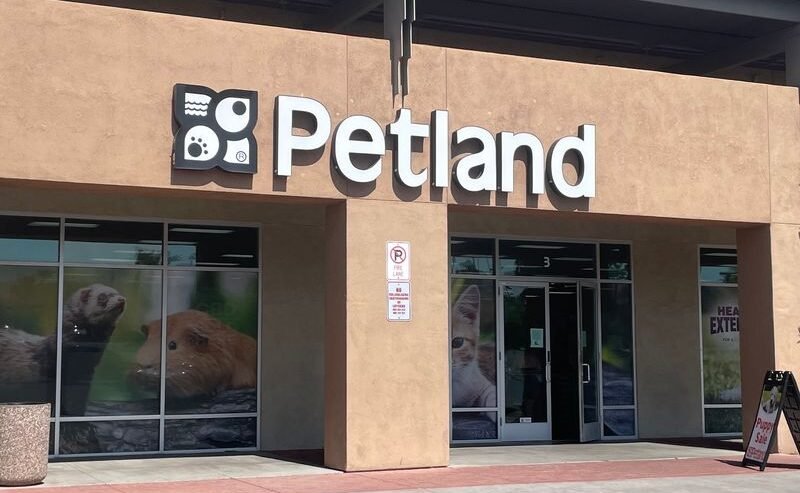
The nonprofit Bailing Out Benji (BOB) acts as a front for the puppy mill industry by promoting Canine Care Certified breeders. BOB states that many CCC breeders are Amish, and BOB states on its website: “The Amish breeders that are behind the Canine Care Certified program are truly trying to set themselves apart by meeting standards that far exceed USDA regulation …” BOB visits CCC facilities and promotes them as not being puppy mills. At the same time, Petland stores market their puppies as coming from CCC breeders to increase sales. It’s a major contradiction for BOB, a nonprofit that supposedly fights puppy mills and claims to discourage the public from buying puppies at pet shops, to be promoting CCC—the same program that is promoted by Petland and financially supported by Petland Charities. The 990s of Petland Charities show large grants to Purdue Research Foundation, which funds the CCC program. The Purdue Foundation’s 990s fail to list their grant recipients. While they no doubt have a long list of recipients, which they can include on a separate page, their lack of transparency is troubling.